How a Concert Programme Shapes the Evening
Concert programme order shapes the evening’s pace and contrast. Learn how to read the sequence, follow transitions, and notice how performers frame each work.
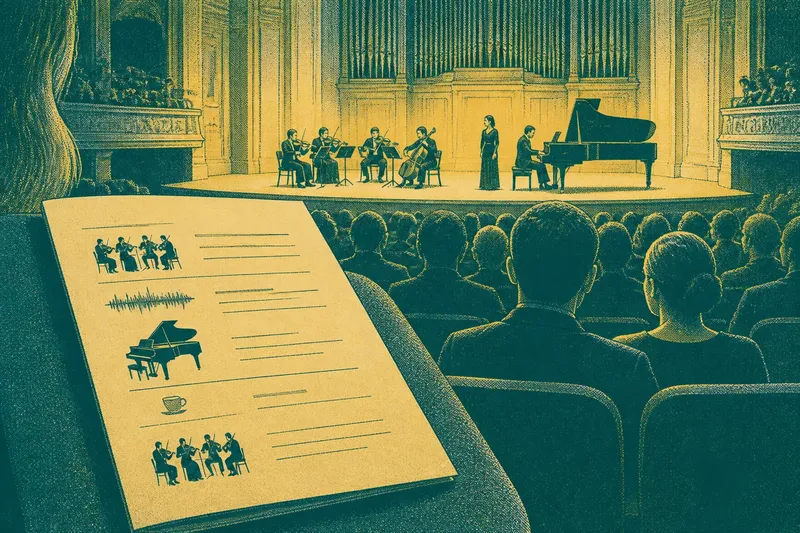
Concert programme order shapes the evening before the first note sounds: a solo work beside an ensemble piece creates a different arc from a concert built around one composer. Reading that structure helps you notice how performers and organizers frame the music, without treating the sequence as a code you must solve.
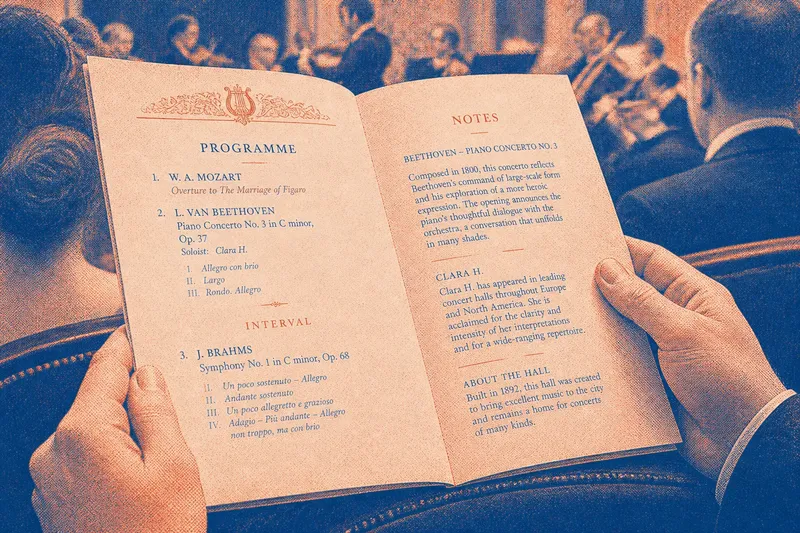
A printed list can signal contrast, continuity, or a change in scale. Those choices belong to the design of the event, not just to the individual works. Looking at them together offers a way to hear the concert as a whole.
Sequence and shape
Begin with the order of the works and the forces involved. A string quartet followed by a piano concerto changes both the number of performers and the balance of sound. A short contemporary piece placed between two longer works may create a hinge, a pause in the evening’s direction, or simply a compact work in its own right.
Look for audible contrasts rather than hidden rules:
- Check whether the ensemble changes; if it does, listen for the new balance of instruments, and if it does not, notice how the same players alter their roles.
- Check whether a short work sits between longer ones; if it does, consider whether the transition feels like a pause or a pivot, and if it does not, follow the larger span between pieces.
- Check whether a performer appears in more than one work; if so, notice how the player’s role changes, and if not, listen for what each new performer brings to the room.
- Check whether the programme returns to a sound or instrument heard earlier; if it does, compare its new context, and if it does not, attend to the contrast between the works.
- Check whether the printed order includes an interval; if it does, use the break to reset your attention, and if it does not, let the transitions between works mark the evening’s sections.
- Check whether a work is identified as a premiere or arrangement; if it is, consider what that framing adds to the event, and if it is not, focus on the performers’ interpretation of the listed work.
These observations do not predict your response. They give you a way to notice the choices that organize the event. A conductor, soloist, or ensemble may make a transition feel more continuous or more abrupt than the printed order suggests.
Framing and context
Programmes can group works by composer, period, form, or a looser theme. Each frame directs attention differently. A composer-focused concert can make changes across a career easier to hear; a mixed programme may set contrasting musical languages beside one another.
Context is useful when it clarifies a choice in the event. The title of a series, the placement of a new work, or the presence of a guest performer may explain why these pieces share a stage. That does not mean every work must illustrate the theme. Treat the frame as an invitation to notice connections, not as a demand to find one.
Say you attend an imagined concert whose printed order places a brief new work between two pieces from an earlier musical period. The listed forces show that the same quartet performs all three. You note the contrast in style, then listen as the short work gives the evening a sharper, more compressed middle section; the resulting impression is a change of pace within a consistent ensemble sound. If the contrast feels less striking in the hall, the order still offers context, but your ears supply the final account.
Transitions and pauses
The space between works contributes to the shape of a concert. Applause, a change of instruments, a stage reset, or an interval can affect how one piece gives way to another. A pause may clear the ear, while an uninterrupted transition can make two works feel linked. Neither approach has a fixed meaning.
Notice what actually happens rather than assuming the printed order determines the effect. A work that looks like a dramatic centerpiece on the page might feel intimate in performance. A modestly placed piece might hold the evening together through a recurring instrumental color or a performer’s presence.
Questions about programme order?
Does the first work set the mood?
It can establish an initial sound or pace, but later works may change the character of the evening. Notice whether the concert confirms that opening impression or moves in another direction.
Why place a short work between longer ones?
A shorter piece can create contrast, mark a transition, or provide a distinct center to the sequence. Its role depends on the works around it and on how the performers shape the change.
What does an interval change?
An interval divides the concert into parts and gives listeners a chance to reset their attention. The second half may continue an earlier thread or begin with a noticeably different sound.
Does the printed sequence explain the music?
No. It explains the order in which works are presented, but it cannot capture every choice in a live interpretation. Use it as context alongside what you hear in the hall.
Reading the event
Before the concert, scan the titles, performers, and any notes about arrangements or premieres. At the venue, notice how the stage setup changes between works and whether the performers speak about the programme. These details can clarify how the event is being presented without requiring specialist knowledge.
If you want to understand a connection between pieces, compare one concrete feature: the ensemble, the presence of a soloist, or the way a work changes the concert’s pace. If no connection stands out, that is useful too. The programme may be designed around contrast rather than a single shared idea.
Concert programme order can make a live performance easier to follow by showing where contrasts and transitions occur. The most revealing detail may be how a familiar ensemble sounds in a new role, or how a brief piece changes the rhythm of the evening. Pay attention to the choice that becomes audible in the room, even when it differs from what the printed sequence led you to expect.