The Familiar Composer Is Not a Listening Plan
Choose a concert by the sound and attention you want, not just a familiar composer, and find a programme better suited to your evening.

A familiar composer is a useful clue, but it is not a listening plan. If you want a concert that feels absorbing, begin by naming the kind of sound or attention you want from the evening, then look for a programme that offers it. A name you recognize can still lead to music that feels distant, while an unfamiliar name may match your mood with surprising precision.
This approach does not require specialist knowledge. Concert listings often give you practical signals: the size of the ensemble, the instruments, the length and shape of the programme, and whether the music is described as quiet, rhythmic, expansive, intimate, or dramatic. Those details can help you decide what suits you better than a composer’s reputation alone.
Start with your evening
Before comparing names, consider what you want your attention to do. Do you want to settle into a long, unfolding piece, follow a clear melody, hear sharply contrasting sounds, or enjoy the shared energy of a large ensemble? These are different listening experiences, and a programme can offer one more strongly than another.
It can help to make the preference specific. “Something lively” could mean a steady pulse, quick exchanges between instruments, or a loud, crowded sound. “Something calming” might mean sustained notes and gentle changes, or simply a smaller ensemble in a quieter setting. The more concrete your preference, the easier it is to interpret a listing.
Think about the conditions around the concert, too. After a busy day, you may prefer music with a clear rhythmic shape rather than a work that asks you to track many subtle changes. If you are going with a friend, you might want a varied programme that gives you different impressions to discuss afterward. Neither preference is more serious than the other; each helps narrow the choice.
Choose by situation
Different evenings call for different kinds of listening. Use your situation as a starting point, then check whether the programme’s format and sound seem to fit.
- You want to unwind. Look for a smaller ensemble, a restrained instrumental palette, or descriptions that suggest spacious, sustained sound. A quiet chamber performance may suit this aim better than a large-scale programme built around forceful contrasts.
- You want momentum. Search for lively rhythms, strong contrasts, or music for a larger ensemble. A listing that mentions percussion, dance rhythms, or vivid orchestral writing may offer more forward motion than a programme centered on long, reflective passages.
- You want an easy point of entry. Choose a concert with a solo instrument or compact ensemble, especially if the listing names a clear featured sound such as piano, string quartet, or voice. Following one prominent musical line can feel more approachable than sorting through a dense orchestral texture.
- You want to be surprised. Consider a mixed programme that places works from different periods or styles together. The changing sounds can keep the evening fresh, even if you do not know the composers or pieces in advance.
- You want to concentrate closely. Look for a focused programme built around a particular instrument, musical form, or small group. A consistent sound world can make it easier to notice changes in phrasing, tone, and interaction.
- You are bringing a new listener. A varied concert with familiar instruments and contrasting moods may give a newcomer several ways into the music. A short work alongside a longer one can also make the programme feel easier to follow.
These are starting points, not rules. A large ensemble can make quiet, delicate music, and a short concert can be demanding. Use the wording in the listing as a guide, then check the programme details instead of assuming that a format always sounds one particular way.
Read the sound clues
When a composer’s name is familiar but the works are not, the programme’s other details matter. A symphony, concerto, song cycle, and chamber work place different demands on the listener. A concerto usually gives one featured instrument a prominent role against an ensemble; a string quartet shares the musical conversation among a small group. Knowing that distinction can tell you more about the evening’s texture than recognizing the composer.
Instrumentation is another useful clue. A listing for a piano recital promises a concentrated focus on one instrument, though the music itself may range from delicate to forceful. A programme for full orchestra can offer a broader palette, with winds, strings, brass, and percussion contributing different colors. If the listing names unusual instruments or a vocal soloist, consider whether that sound appeals to you, even if the composer is unfamiliar.
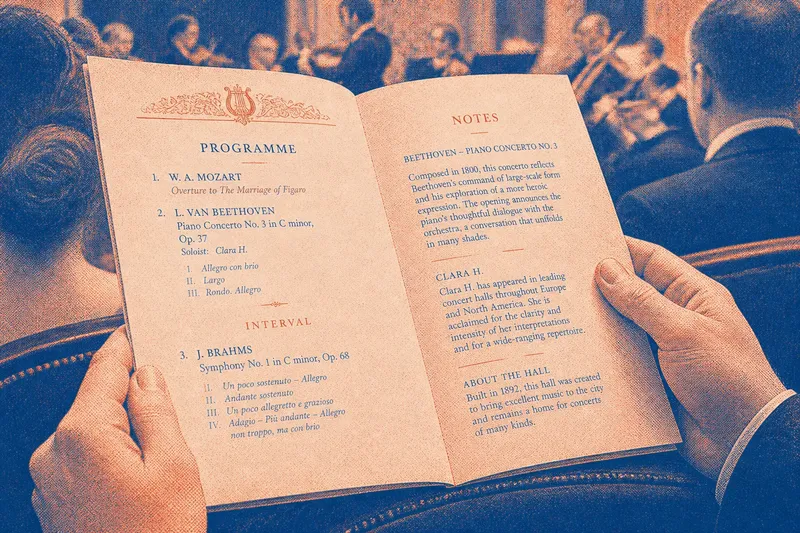
Look for the arrangement of the programme as well. Several short pieces may offer frequent changes of mood; one long work may invite you to follow a gradual development. A concert combining a solo work and an ensemble piece gives you more than one listening scale. The event page, venue calendar, and printed programme usually provide enough information to compare these shapes without reading a technical analysis.
Descriptive words are helpful but broad. “Dramatic” may refer to contrast and intensity; “lyrical” often points toward a strong melodic line; “playful” can suggest quick exchanges or unexpected turns. Treat those words as prompts to check the instruments and pieces, not as promises of a particular reaction.
When does a known name help?
What if you only recognize the composer?
Use the name as a route to the works listed, not as a verdict on the whole evening. Check whether the programme includes a piece or instrument you already enjoy, then decide whether the rest of the format suits your mood.
Should you listen to a recording first?
A recording can help you recognize the instruments or hear the broad shape of a piece, but it cannot reproduce the feel of a live room. If you listen beforehand, focus on whether the sound and pacing appeal to you rather than trying to memorize the music.
What if the music is unfamiliar?
Choose one detail to follow, such as a recurring melody, a change in volume, or an exchange between instruments. That small point of attention gives you a way into the performance without requiring prior knowledge.
How much should reviews influence the choice?
A review may clarify what a performance emphasizes, but its language reflects another listener’s priorities. Compare the description with your own preference for sound, pace, and ensemble size, and treat disagreement as useful information rather than a warning.
A sample choice
Say you have had a noisy day and want an evening that feels focused rather than forceful. The listings offer a large orchestral programme built around vivid contrasts and a string quartet concert featuring two compact works. You do not know the quartet’s composers, but the smaller ensemble and concentrated format fit what you want. You choose that concert, expecting the separate string lines to be easier to follow in the quiet room; if the music proves more animated than expected, the chamber setting still gives you a close view of how the players respond to one another.
The choice is not based on a claim that one kind of music is inherently calmer. It follows from the preference you identified and the clues the listing provides. Another listener, eager for a bold, varied sound, could reasonably choose the orchestral programme instead.
Make a flexible choice
If two concerts both fit, compare what you would actually hear: the ensemble, the featured instruments, the number and length of works, and the balance between contrast and continuity. Then consider the venue and the practical shape of the evening. A familiar hall may make a new programme feel less daunting, while a smaller space may appeal if you want to notice subtle instrumental details.
Let a familiar composer remain part of the decision, especially if that name brings back a sound you genuinely want to hear. But allow the specific work and performance format to carry equal weight. The same composer can write for a solo instrument, a small ensemble, or a full orchestra, and each setting creates a different kind of encounter.
For your next search, try the phrase “concerts with [the sound or experience you want]” alongside your city or preferred venue, then inspect the programme details. Starting from the experience you want makes unfamiliar names easier to consider and familiar ones easier to judge. You can arrive without knowing exactly what you will think; it is enough to know what kind of listening you are ready for.